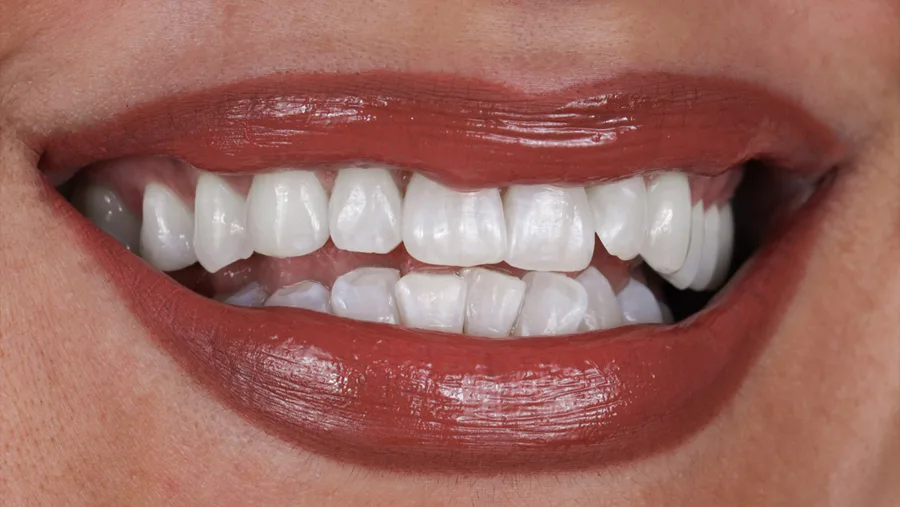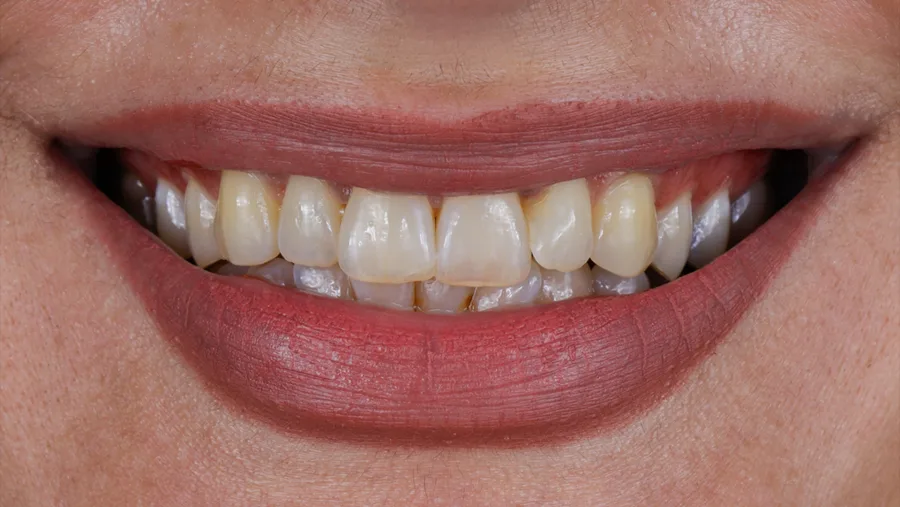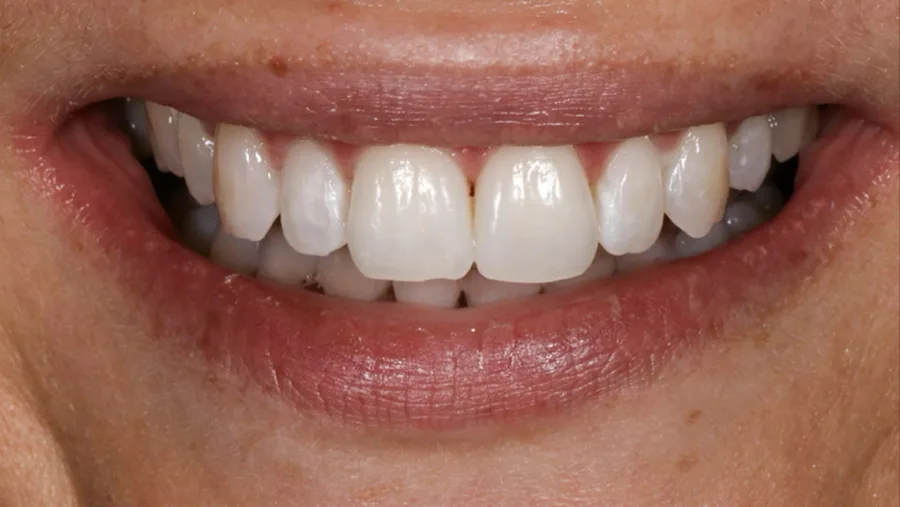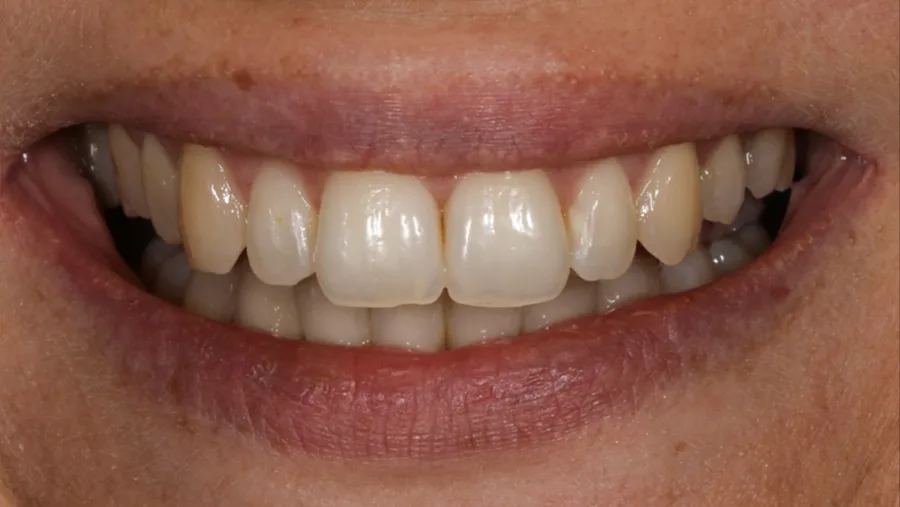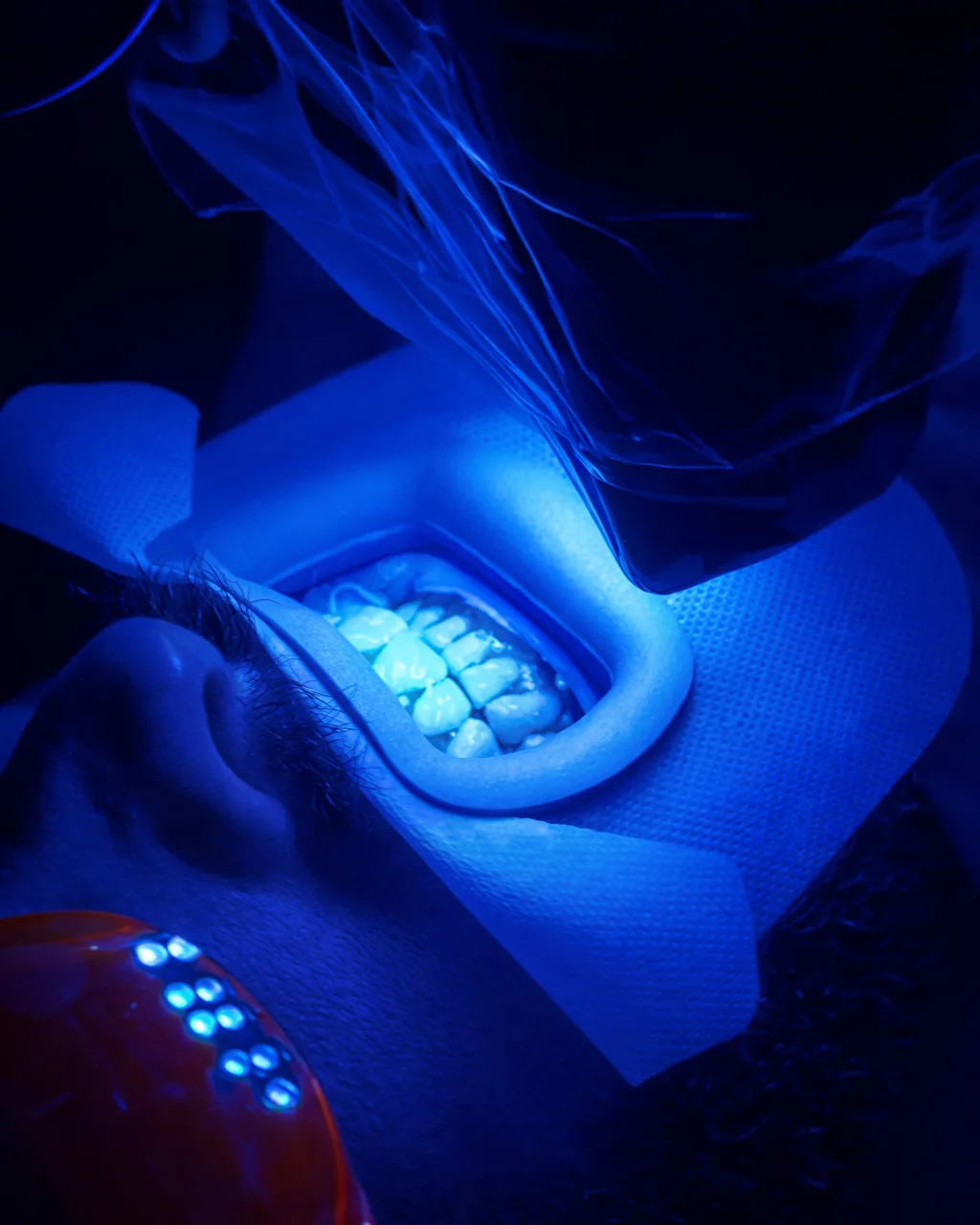
How does teeth whitening work?
Dental bleaching agents work by breaking down colored compounds within natural teeth, making them appear lighter. Results depend on the original tooth color, the cause of discoloration, and how your teeth respond to treatment.
Whitening differs from scaling and polishing: professional cleaning removes plaque, tartar, and external stains, while bleaching can lighten the natural tooth color. Your dentist may recommend cleaning before whitening if needed.
Advantages of professional whitening
A brighter natural smile
Whitening can reduce many common types of tooth discoloration while maintaining your existing tooth shape.
No drilling or reshaping
Whitening does not require teeth to be prepared for veneers or crowns.
Professional assessment and supervision
Your dentist checks for conditions that could affect treatment, including cavities, gum disease, exposed roots, and existing sensitivity.
Treatment tailored to your needs
The treatment schedule can be adjusted according to your response, comfort, and the product’s instructions.
A conservative cosmetic option
For patients primarily concerned about tooth color, whitening may provide an improvement without restorative treatment.
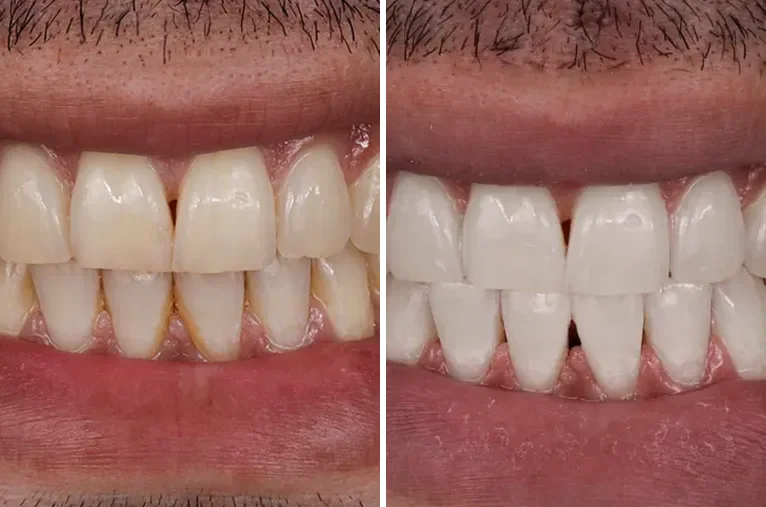
The treatment process
- 1
Consultation and shade assessment
Your dentist examines your teeth and gums, identifies possible causes of discoloration, and discusses realistic expectations. Your starting shade is recorded, and photographs may be taken to document the result.
- 2
Preparation
Any dental problems requiring treatment are addressed first. Scaling and polishing may be recommended if plaque, tartar, or surface staining could interfere with treatment.
- 3
Protection of the surrounding tissues
For in-clinic whitening, your dentist protects the gums and surrounding soft tissues before applying the whitening product.
- 4
Application of the Nano whitening product
The product is applied according to its manufacturer’s instructions. Your dental team monitors your comfort and response throughout treatment. Application times and the number of cycles depend on the specific Nano system used and your individual needs.
- 5
Removal and assessment
The whitening product is removed, and your dentist reviews the initial color change. The shade immediately after treatment may appear temporarily lighter because of dehydration; the result is reassessed once the teeth rehydrate and the color settles.
- 6
Aftercare and maintenance planning
You receive advice on sensitivity management, daily care, and maintaining your result. Additional sessions or dentist-prescribed home whitening may be recommended when appropriate.
How long does treatment take?
Appointment length and the number of sessions depend on the Nano product used, your starting shade, and your response. Some patients notice an improvement after one appointment, while others need a staged course. Your dentist will explain the expected schedule before treatment.
Is teeth whitening uncomfortable?
Temporary tooth sensitivity and gum irritation can occur during or after whitening. Inform your dentist if you already have sensitive teeth. Treatment may be adjusted or paused, and a desensitizing product may be recommended.
Whitening is not completely painless or sensitivity-free for everyone, because individual responses vary.
How long do results last?
Whitening results are not permanent. Their duration depends on your diet, tobacco use, oral hygiene, and natural ageing. Occasional maintenance may help preserve the result but repeat treatment should follow your dentist’s advice.
Caring for your smile after whitening
- Brush twice daily with fluoride toothpaste and clean between your teeth daily.
- Follow the specific aftercare instructions provided by your dental team.
- Reduce frequent exposure to staining drinks and avoid tobacco.
- Attend regular dental examinations and professional cleaning appointments.
- Use additional whitening products only as advised by your dentist.
Teeth whitening or veneers?
| Feature | Professional teeth whitening | Dental veneers |
|---|---|---|
| Main purpose | Lightens natural tooth color | Changes color, shape, size, and selected imperfections |
| Tooth preparation | No drilling or reshaping | Enamel preparation may be required |
| Gaps and chips | Does not correct them | Can address suitable small gaps and chips |
| Existing restorations | Does not lighten crowns, veneers, or fillings | Restorations are individually shade-matched |
| Maintenance | Whitening may need periodic maintenance | Veneers may eventually need repair or replacement |
Main purpose
- Professional teeth whitening
- Lightens natural tooth color
- Dental veneers
- Changes color, shape, size, and selected imperfections
Tooth preparation
- Professional teeth whitening
- No drilling or reshaping
- Dental veneers
- Enamel preparation may be required
Gaps and chips
- Professional teeth whitening
- Does not correct them
- Dental veneers
- Can address suitable small gaps and chips
Existing restorations
- Professional teeth whitening
- Does not lighten crowns, veneers, or fillings
- Dental veneers
- Restorations are individually shade-matched
Maintenance
- Professional teeth whitening
- Whitening may need periodic maintenance
- Dental veneers
- Veneers may eventually need repair or replacement