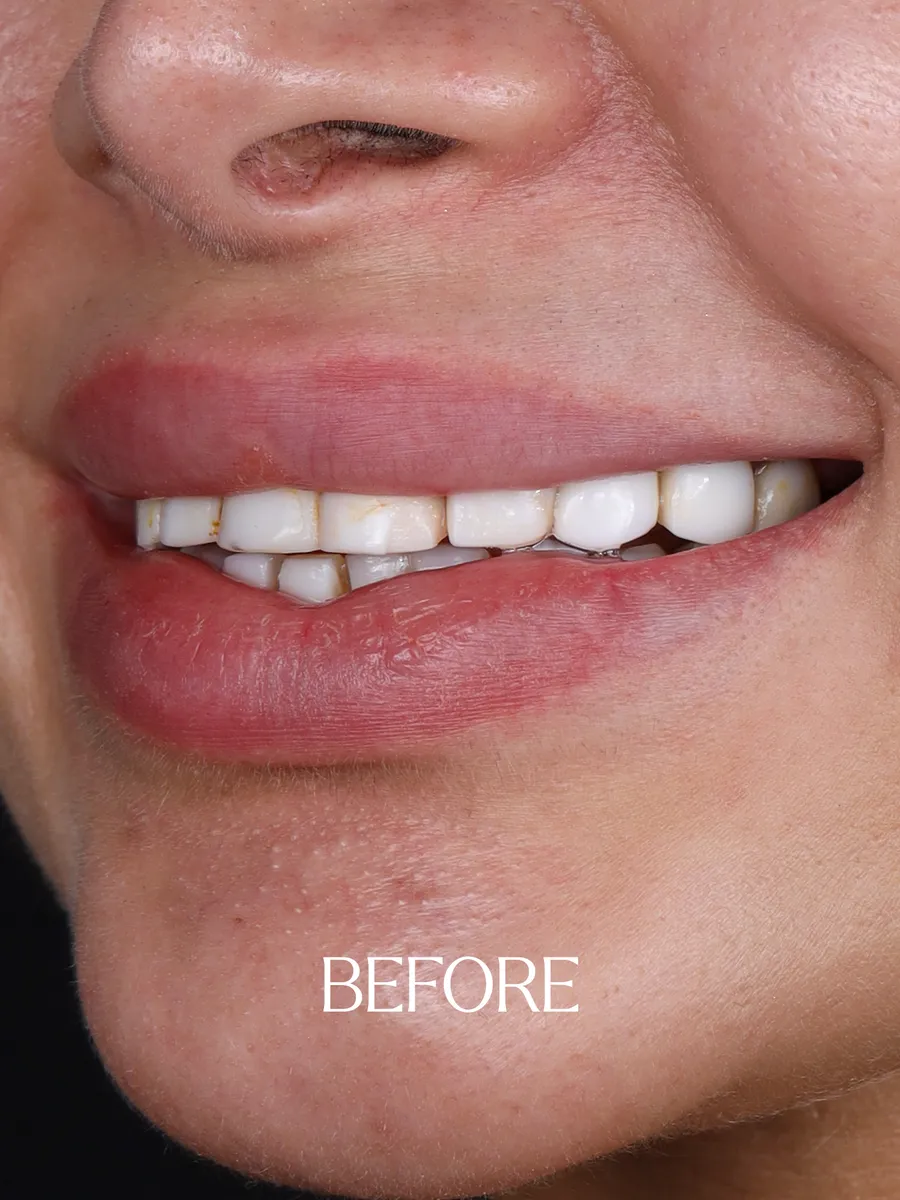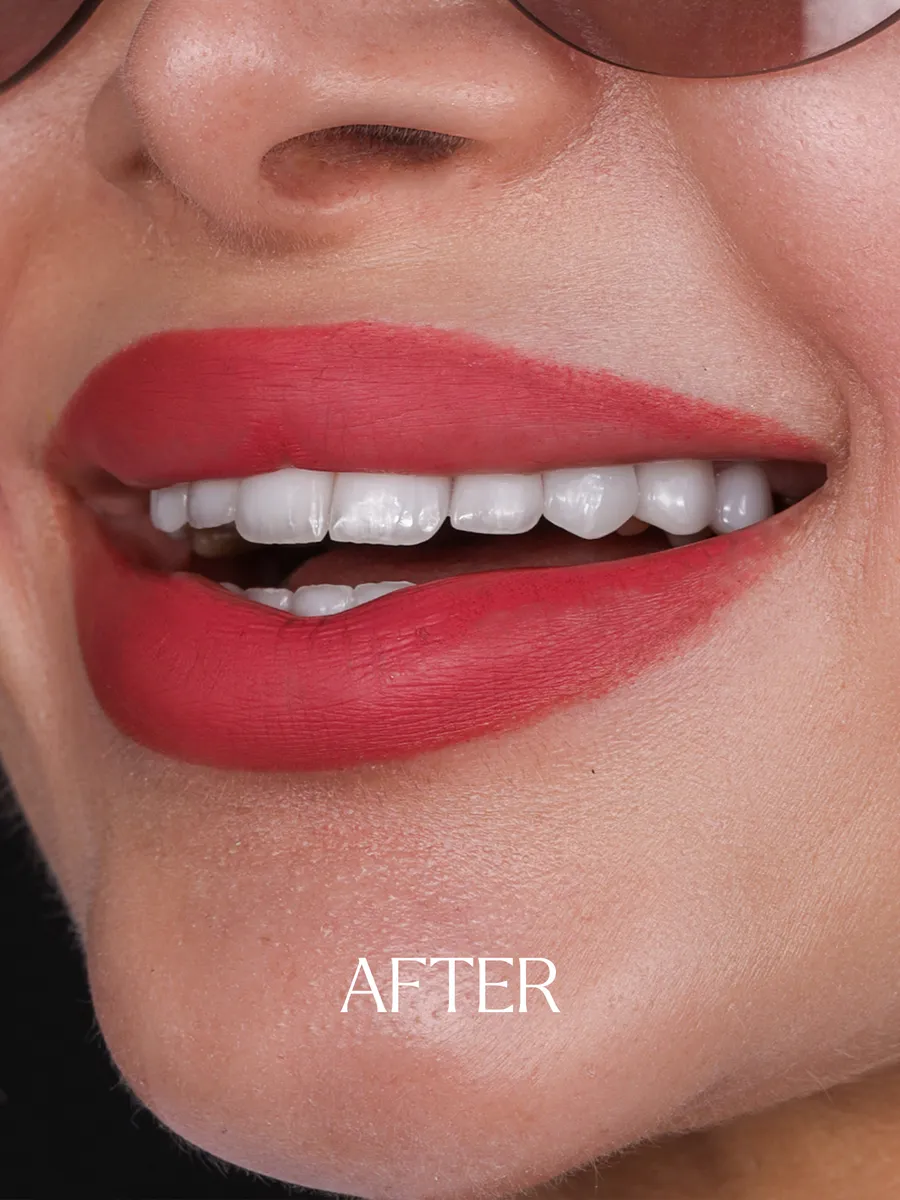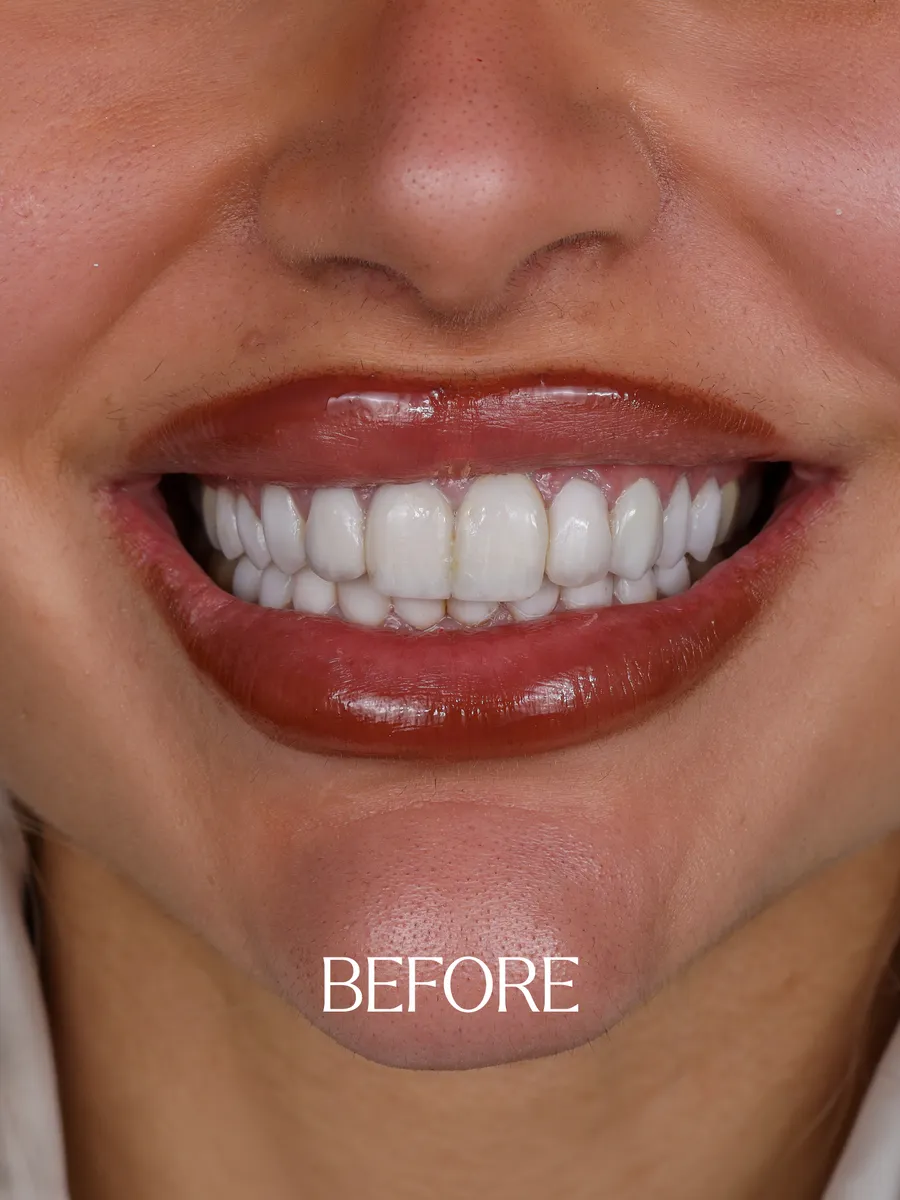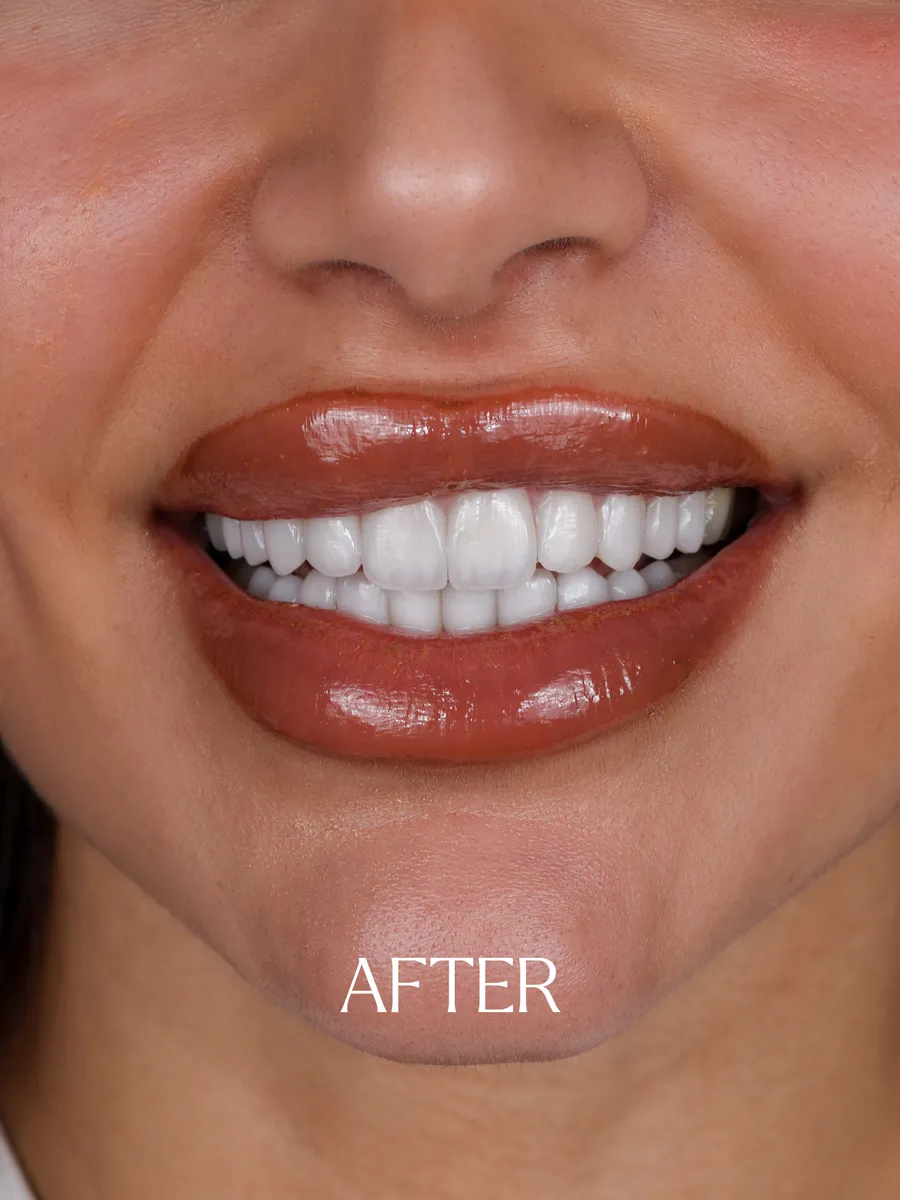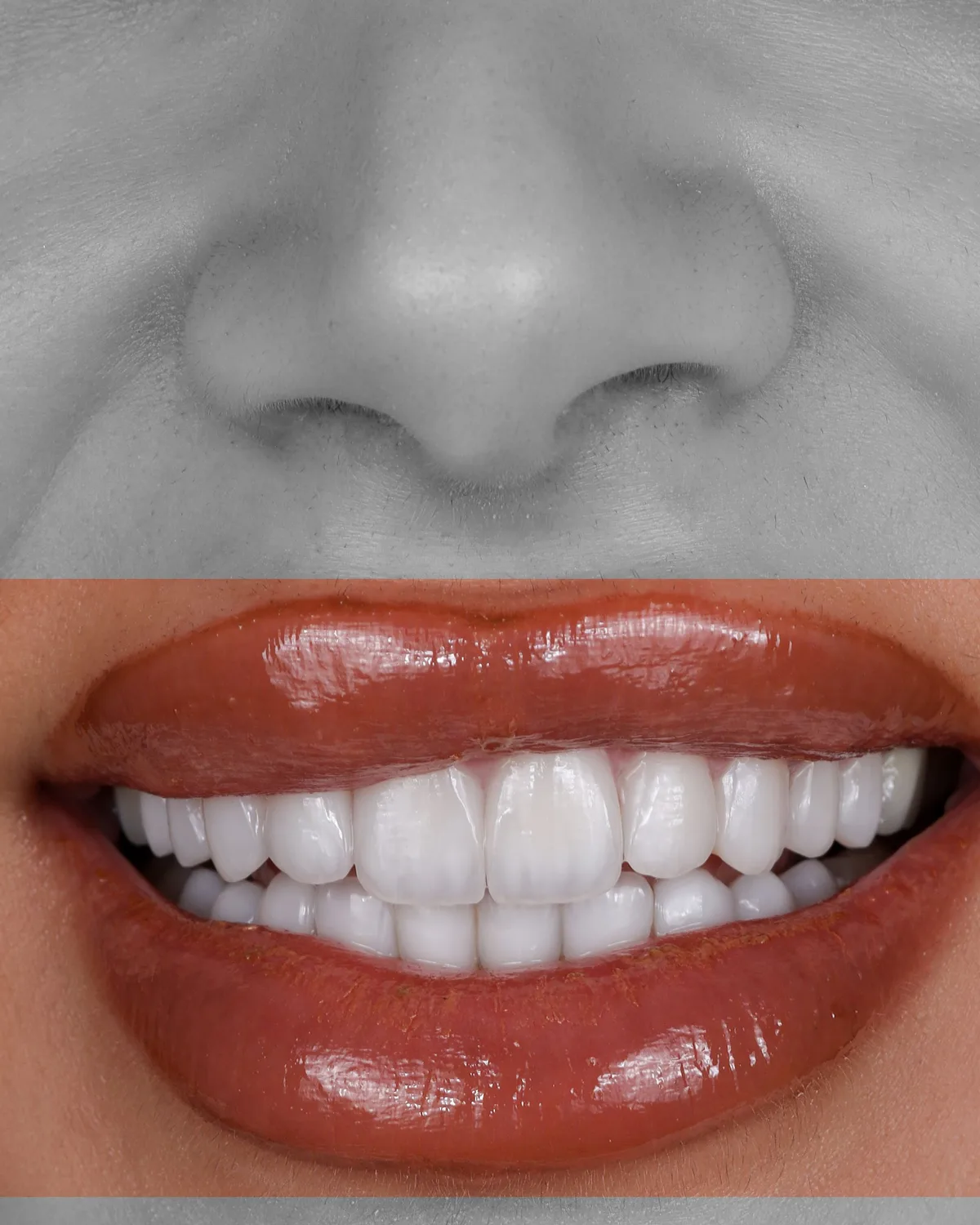
What can semi-feldspathic veneers improve?
These veneers may help improve:
- Discolored teeth that do not respond sufficiently to whitening.
- Small chips and minor surface imperfections.
- Small spaces between teeth.
- Uneven tooth shapes, lengths, or proportions.
- Minor positional irregularities where orthodontic treatment is not needed.
Your dentist will assess your enamel, existing restorations, gums, and bite before recommending treatment. Active decay or gum disease should be treated first, and grinding or clenching may affect suitability.
Advantages of semi-feldspathic veneers
A supportive ceramic base
The lithium disilicate base provides greater material strength than traditional feldspathic porcelain alone. However, the finished veneer still requires careful design, bonding, and bite assessment.
Personalized surface detail
Hand-layered porcelain allows the ceramist to create subtle color transitions, natural surface texture, and individual edge characteristics.
Natural-looking light effects
The combination of the base and outer ceramic can be selected to balance translucency and coverage according to the color of the underlying tooth.
Flexible smile design
The shape, shade, and character of each veneer can be tailored to your preferences, whether you want a subtle enhancement or a brighter smile.
Conservative preparation when suitable
Treatment aims to preserve healthy tooth structure. The amount of preparation depends on the tooth position, underlying color, required ceramic thickness, and planned result, not simply the veneer’s name.
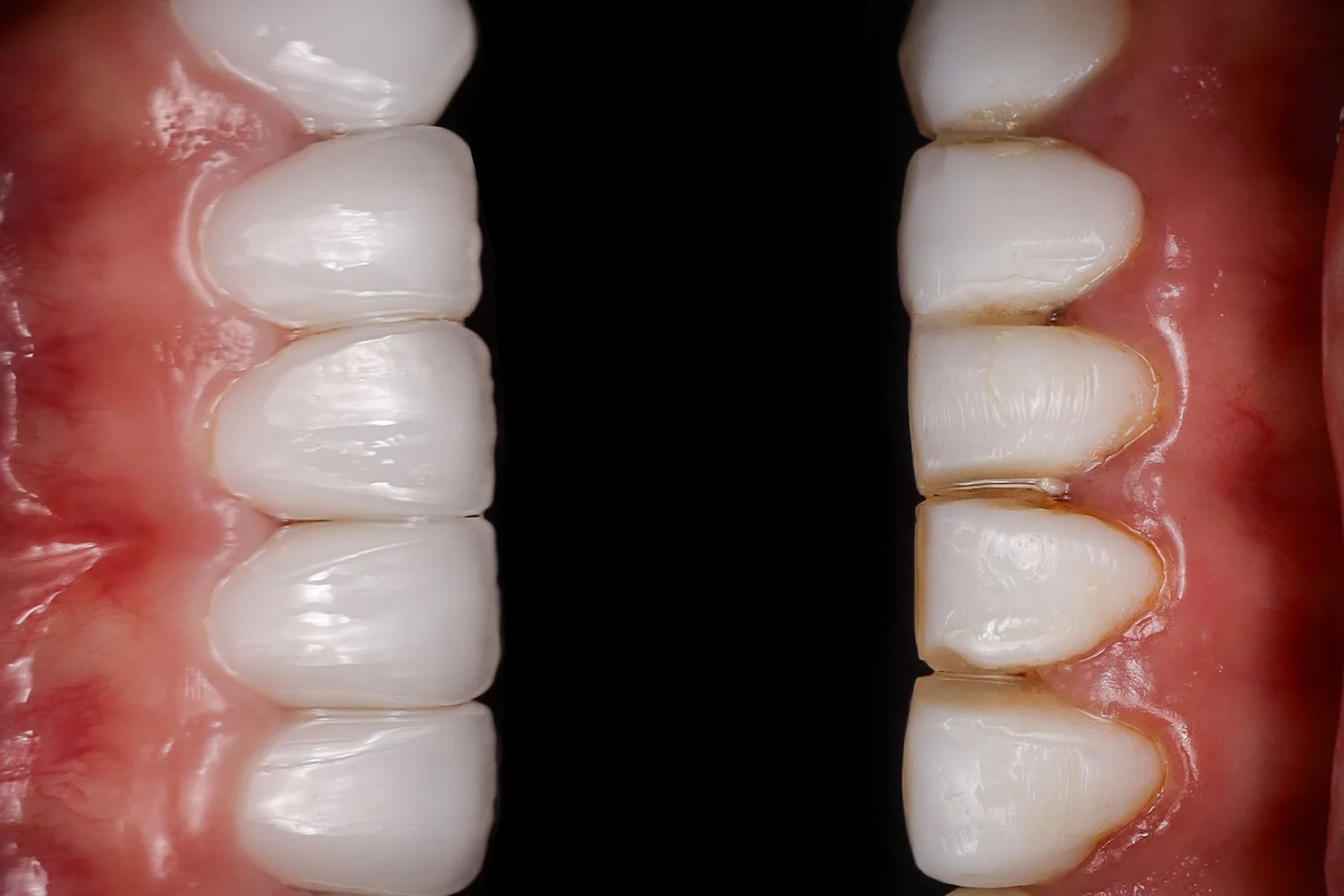
The treatment process
- 1
Consultation and smile planning
During your first appointment, your dentist discusses your expectations and examines your teeth, gums, and bite. Digital scans and before photographs are taken to help plan your smile and communicate the design to the laboratory.
A diagnostic design and mock-up may be arranged to preview the proposed tooth shapes. An index may also be prepared to create temporary veneers after preparation.
- 2
Tooth preparation
Where necessary, a controlled amount of tooth surface is prepared to make room for the veneers. Your dentist aims to preserve as much healthy enamel as possible while allowing a suitable fit and appearance. Local anesthetic may be used for comfort.
Not every patient is suitable for minimal-preparation or no-preparation veneers.
- 3
Final scan or impression
A precise scan or impression records the prepared teeth for the laboratory. Depending on your treatment plan, this can take place during preparation or at a separate appointment.
Temporary veneers are fitted when needed to protect the prepared teeth and maintain their appearance while the final veneers are being made.
- 4
Laboratory fabrication
The laboratory creates the lithium disilicate base, then adds compatible aesthetic porcelain to selected areas. The ceramist develops the final contours, shade, texture, and translucency according to your approved smile plan.
- 5
Fitting and try-in
Your dentist checks the veneers’ fit, appearance, contact points, and bite. You review the proposed result before final bonding. If necessary, the veneers return to the laboratory for adjustments.
- 6
Final bonding and follow-up
Once approved, the veneers are bonded to your teeth using a dental adhesive system. Your dentist checks your bite, finishes the edges, and explains how to care for your new smile. A follow-up visit helps assess comfort, gum health, and function.
Treatment timeThe planned process is approximately two to three weeks, depending on laboratory availability, case complexity, and any adjustments required. Your dentist will confirm your individual schedule.
Aftercare and long-term considerations
Brush twice daily with fluoride toothpaste, clean between your teeth daily, and attend regular dental reviews. Avoid biting hard objects or using your teeth to open packaging. A protective night guard may be recommended if you grind or clench.
All ceramic veneers can chip, crack, or become detached. Layered veneers can also develop chips in the outer porcelain, even when the underlying base remains intact. Sensitivity and decay around the underlying tooth are possible, and veneers may eventually require replacement. Treatment is irreversible where enamel has been removed.
| Feature | E-max veneers | Semi-feldspathic veneers | Feldspathic veneers |
|---|---|---|---|
| Material | Lithium disilicate glass-ceramic | Lithium disilicate base with compatible aesthetic porcelain layering | Feldspathic porcelain |
| Fabrication | Pressed or digitally milled, then finished and characterized | Base is pressed or milled, followed by hand layering | Traditionally built by hand in fine porcelain layers |
| Main advantage | Combines high material strength with excellent aesthetics | Combines a supportive base with detailed surface customization | Offers highly individualized layering and fine optical detail |
| Appearance | Can look highly natural; available in different translucencies | Allows additional control over texture, color, and edge effects | Particularly valued for delicate translucency and enamel-like effects |
| Strength considerations | Stronger ceramic material than feldspathic porcelain | Strong base, but the outer porcelain remains susceptible to chipping | Lower material strength: enamel support and careful bonding are especially important |
| Tooth preparation | Can be conservative in suitable cases | Depends on the space needed for the base and layering | Can be very thin in suitable cases |
| Masking dark teeth | Different opacity options can help; results depend on thickness and tooth color | Base opacity and layering can be selected to help manage color | Highly translucent designs may allow underlying discoloration to show through |
| Often considered when | Both aesthetics and material strength are priorities | A layered appearance and supportive base are desired | Fine aesthetic detail is a priority and sufficient enamel remains |
| Treatment stages | Consultation, planning, preparation if needed, scan or impression, try-in, and bonding | Same core stages, with additional laboratory layering | Same core stages, with handcrafted porcelain fabrication |
| Maintenance | Daily cleaning, regular reviews, and bite protection when indicated | Same care, with attention to the layered surface | Same care, with attention to porcelain protection |
Material
- E-max veneers
- Lithium disilicate glass-ceramic
- Semi-feldspathic veneers
- Lithium disilicate base with compatible aesthetic porcelain layering
- Feldspathic veneers
- Feldspathic porcelain
Fabrication
- E-max veneers
- Pressed or digitally milled, then finished and characterized
- Semi-feldspathic veneers
- Base is pressed or milled, followed by hand layering
- Feldspathic veneers
- Traditionally built by hand in fine porcelain layers
Main advantage
- E-max veneers
- Combines high material strength with excellent aesthetics
- Semi-feldspathic veneers
- Combines a supportive base with detailed surface customization
- Feldspathic veneers
- Offers highly individualized layering and fine optical detail
Appearance
- E-max veneers
- Can look highly natural; available in different translucencies
- Semi-feldspathic veneers
- Allows additional control over texture, color, and edge effects
- Feldspathic veneers
- Particularly valued for delicate translucency and enamel-like effects
Strength considerations
- E-max veneers
- Stronger ceramic material than feldspathic porcelain
- Semi-feldspathic veneers
- Strong base, but the outer porcelain remains susceptible to chipping
- Feldspathic veneers
- Lower material strength: enamel support and careful bonding are especially important
Tooth preparation
- E-max veneers
- Can be conservative in suitable cases
- Semi-feldspathic veneers
- Depends on the space needed for the base and layering
- Feldspathic veneers
- Can be very thin in suitable cases
Masking dark teeth
- E-max veneers
- Different opacity options can help; results depend on thickness and tooth color
- Semi-feldspathic veneers
- Base opacity and layering can be selected to help manage color
- Feldspathic veneers
- Highly translucent designs may allow underlying discoloration to show through
Often considered when
- E-max veneers
- Both aesthetics and material strength are priorities
- Semi-feldspathic veneers
- A layered appearance and supportive base are desired
- Feldspathic veneers
- Fine aesthetic detail is a priority and sufficient enamel remains
Treatment stages
- E-max veneers
- Consultation, planning, preparation if needed, scan or impression, try-in, and bonding
- Semi-feldspathic veneers
- Same core stages, with additional laboratory layering
- Feldspathic veneers
- Same core stages, with handcrafted porcelain fabrication
Maintenance
- E-max veneers
- Daily cleaning, regular reviews, and bite protection when indicated
- Semi-feldspathic veneers
- Same care, with attention to the layered surface
- Feldspathic veneers
- Same care, with attention to porcelain protection
Which veneer is right for you?
All three approaches can create an attractive, natural-looking smile. The best choice depends on your enamel, tooth color, bite, existing restorations, and preferred result. The quality of planning, laboratory work, and bonding is as important as the material selected.