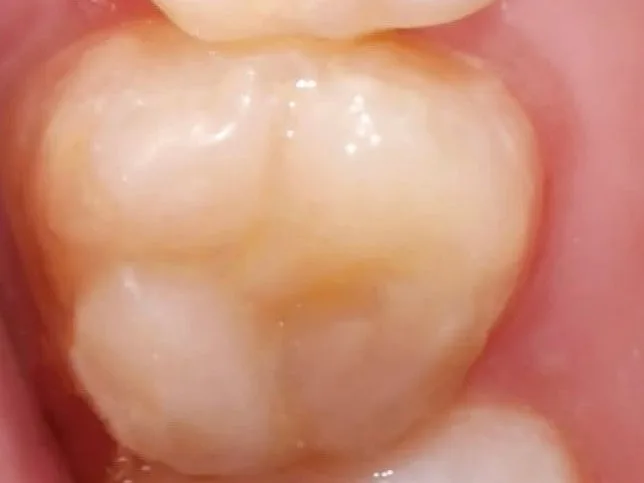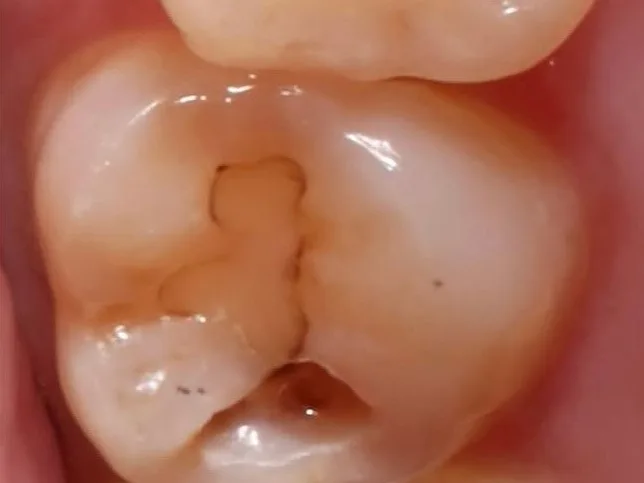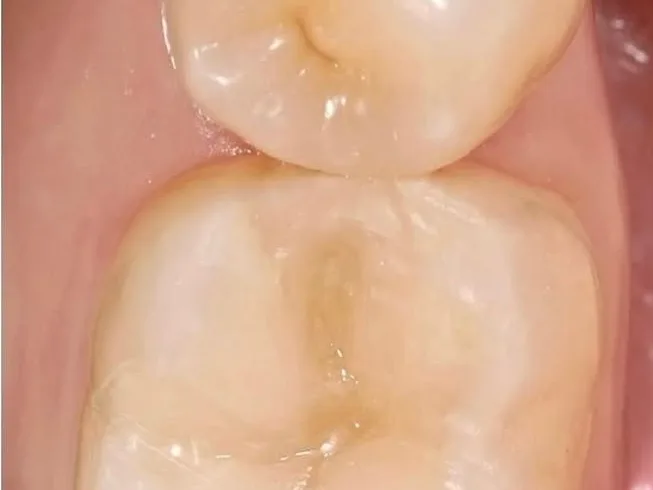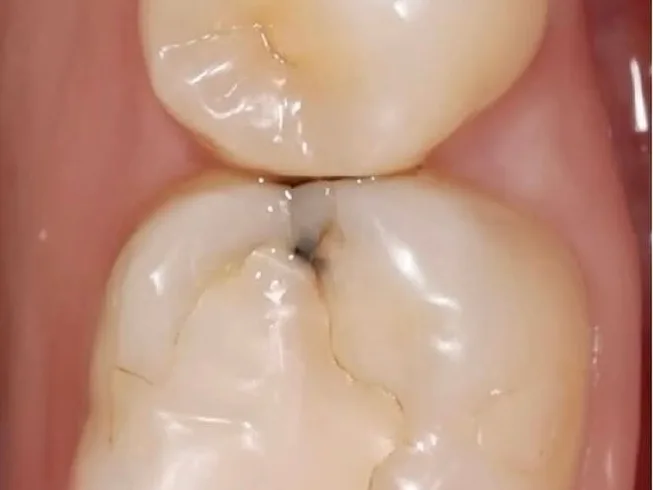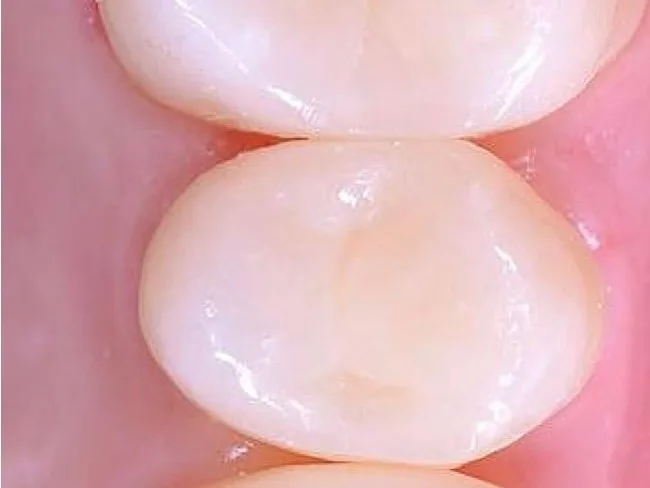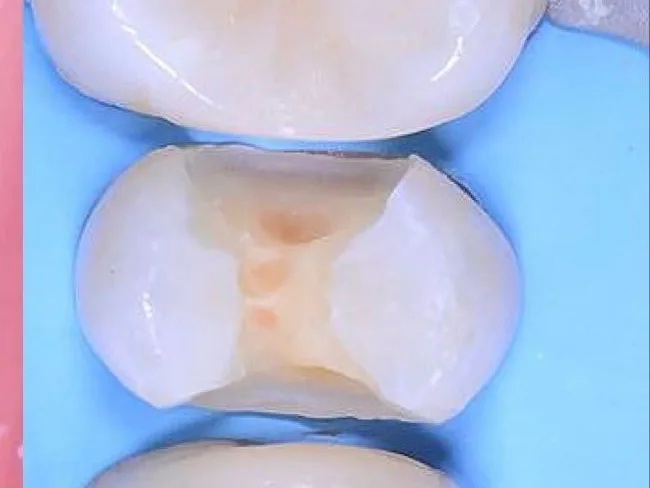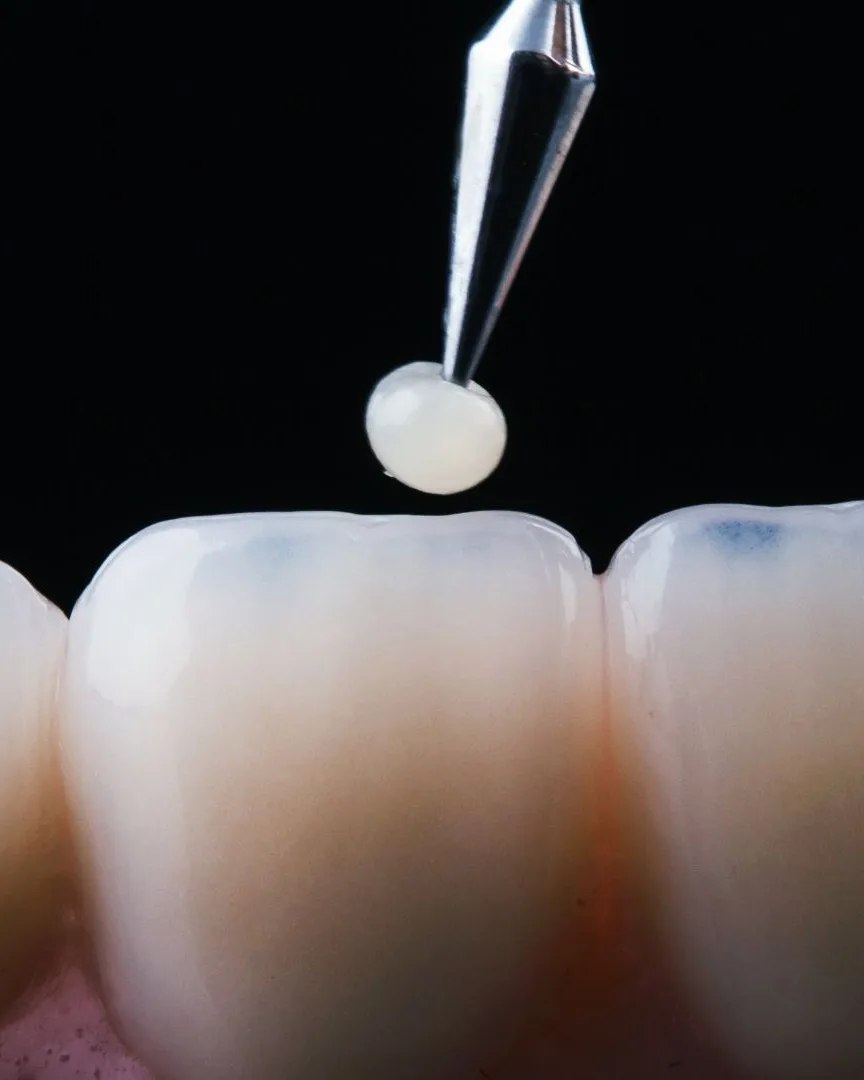
What can composite restorations treat?
Composite restorations may be used to:
- Restore teeth affected by cavities.
- Repair small chips and selected minor fractures.
- Replace damaged or defective fillings when clinically necessary.
- Restore selected areas of tooth wear.
- Improve minor shape irregularities or close small gaps through cosmetic bonding.
Composite can be used on both front and back teeth. Suitability depends on the amount of remaining tooth structure, the size and position of the restoration, and the forces placed on the tooth.
Advantages of composite restorations
A natural appearance
Composite is available in different shades and translucencies, allowing your dentist to blend the restoration with the surrounding tooth.
Preservation of healthy tooth structure
The material bonds to the tooth, allowing a conservative preparation where clinically appropriate. Decayed or unsupported tissue still needs to be managed.
Restoration of shape and function
Careful shaping helps rebuild the tooth’s chewing surface, edges, and contact with neighbouring teeth.
Usually completed in one appointment
Most direct composite restorations are placed, hardened, and polished during the same visit, without laboratory fabrication.
Repairable in suitable cases
Some worn or chipped composite restorations can be repaired or refinished instead of being completely replaced.
We use SHOFU and IPS composite materials for tooth-coloured restorations. The material and shade are selected according to the tooth’s location, the extent of the repair and your individual clinical needs, with the aim of restoring tooth shape and function while blending with your natural smile.
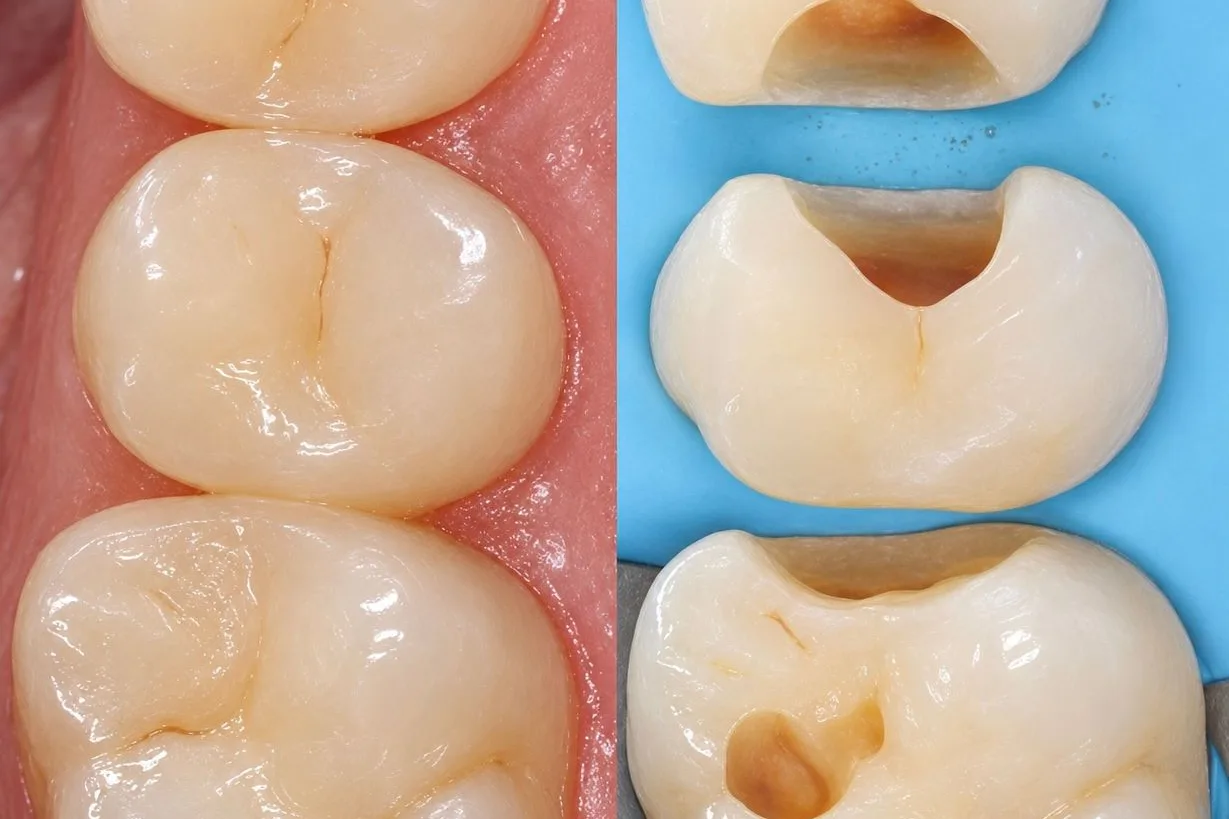
The treatment process
- 1
Consultation and assessment
Your dentist examines the tooth, discusses your symptoms, and assesses existing fillings and your bite. X-rays may be recommended to evaluate decay or damage that is not visible during the examination.
If a tooth is extensively damaged or the nerve is affected, a filling alone may not be sufficient. Your dentist will explain suitable alternatives.
- 2
Shade selection and anaesthetic
A composite shade is selected to match your tooth. Local anaesthetic is used when needed to keep you comfortable, particularly when treating decay or sensitive areas.
- 3
Tooth preparation
The dentist manages the decay and removes defective material where necessary while preserving healthy tooth structure. For deep cavities, a protective approach may be used to reduce the risk of exposing the nerve.
- 4
Isolation and bonding
The tooth is kept clean and dry using a rubber dam or another suitable isolation method. The surface is treated with a dental adhesive system to bond the composite to the tooth.
- 5
Composite placement and curing
The composite is placed and shaped using a technique suited to the material and cavity. A dental curing light hardens the material according to the manufacturer’s instructions.
- 6
Shaping, bite adjustment, and polishing
Your dentist refines the restoration, checks the contact between teeth, and adjusts your bite. The surface is polished to create a smooth finish.
How long does treatment take?
Most composite fillings are completed in one visit. Appointment length depends on the size, depth, location, and number of restorations. Multiple teeth or complex cosmetic work may require additional appointments.
Is treatment painful?
Local anaesthetic can make treatment more comfortable when required. Temporary sensitivity to temperature or pressure may occur afterwards, particularly with deeper restorations.
Contact the clinic if your bite feels uneven, sensitivity persists or worsens, or you develop spontaneous pain, swelling, or pain that disturbs your sleep. A deeply decayed tooth may sometimes require further treatment, including root canal treatment, despite an appropriately placed restoration.
How long do composite restorations last?
Composite restorations can provide several years of service, but their lifespan varies. The size of the filling, remaining tooth structure, oral hygiene, diet, and grinding or clenching all influence durability.
Over time, composite can stain, wear, chip, or develop defects around its edges. Decay can also develop beside a restoration. Regular dental reviews help identify when polishing, repair, or replacement is needed.
Aftercare
- Wait until local anaesthetic has worn off before chewing to avoid biting your cheek, lip, or tongue.
- Brush twice daily with fluoride toothpaste.
- Clean between your teeth every day.
- Limit frequent sugary snacks and drinks.
- Avoid chewing ice, pens, or other hard objects.
- Use a night guard if recommended for grinding or clenching.
- Attend regular dental reviews based on your individual needs.
| Feature | Direct composite restorations | Ceramic inlays, onlays, or crowns |
|---|---|---|
| Material | Tooth-coloured dental resin with filler particles | Dental ceramic |
| Common uses | Cavities, small chips, and selected areas of wear | Larger defects or teeth needing additional coverage |
| Fabrication | Shaped directly on the tooth | Usually fabricated outside the mouth |
| Appointments | Usually one | One or more, depending on the system |
| Appearance | Shade-matched and polished | Highly aesthetic with good colour stability |
| Maintenance | May need polishing, repair, or replacement | May also need repair or replacement; ceramic can fracture |
| Selection | Depends on defect size, isolation, tooth structure, and bite | Depends on the same factors and the coverage required |
Material
- Direct composite restorations
- Tooth-coloured dental resin with filler particles
- Ceramic inlays, onlays, or crowns
- Dental ceramic
Common uses
- Direct composite restorations
- Cavities, small chips, and selected areas of wear
- Ceramic inlays, onlays, or crowns
- Larger defects or teeth needing additional coverage
Fabrication
- Direct composite restorations
- Shaped directly on the tooth
- Ceramic inlays, onlays, or crowns
- Usually fabricated outside the mouth
Appointments
- Direct composite restorations
- Usually one
- Ceramic inlays, onlays, or crowns
- One or more, depending on the system
Appearance
- Direct composite restorations
- Shade-matched and polished
- Ceramic inlays, onlays, or crowns
- Highly aesthetic with good colour stability
Maintenance
- Direct composite restorations
- May need polishing, repair, or replacement
- Ceramic inlays, onlays, or crowns
- May also need repair or replacement; ceramic can fracture
Selection
- Direct composite restorations
- Depends on defect size, isolation, tooth structure, and bite
- Ceramic inlays, onlays, or crowns
- Depends on the same factors and the coverage required
Restore your tooth with a personalised approach.
Book an assessment at Elora Aesthetic Polyclinic to discuss the most suitable restoration for your smile.