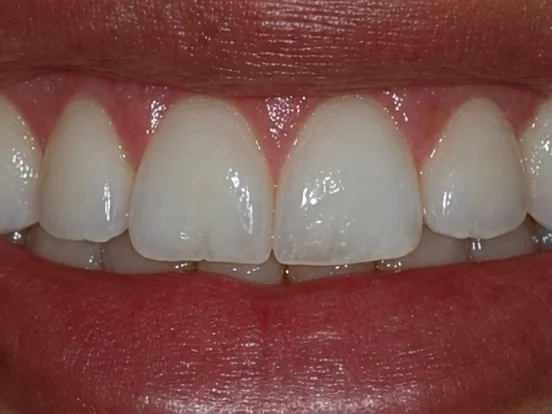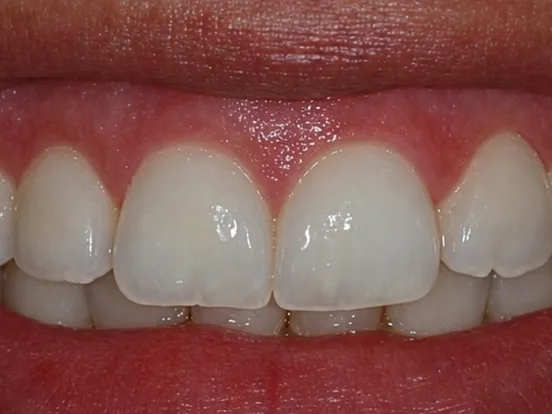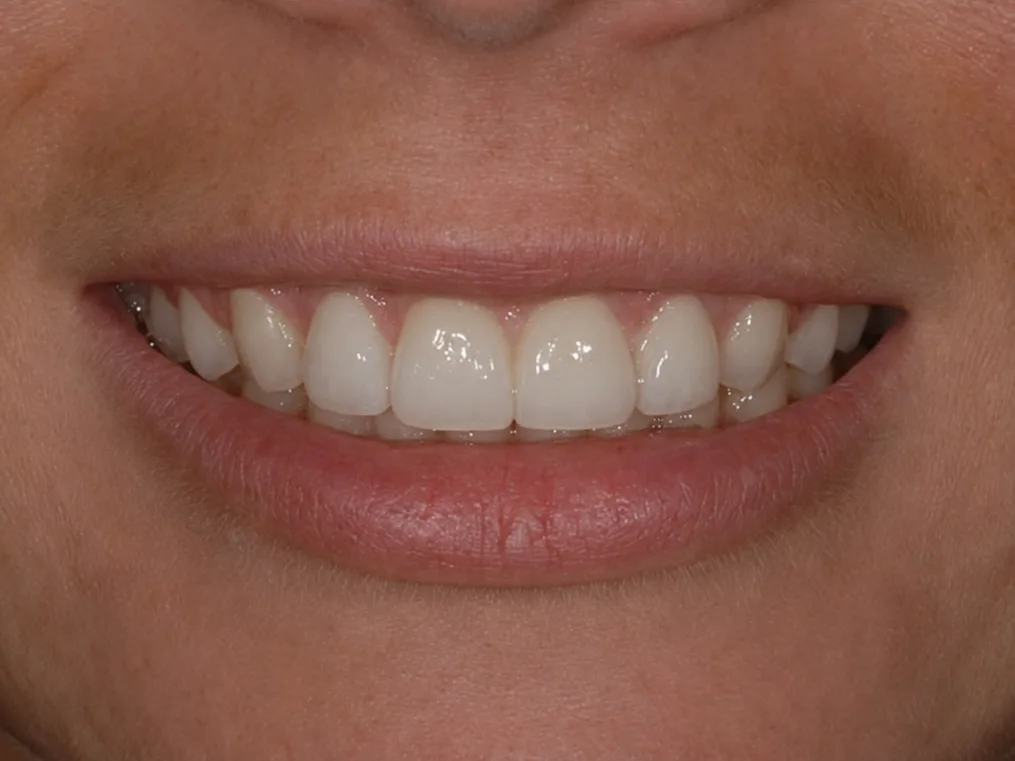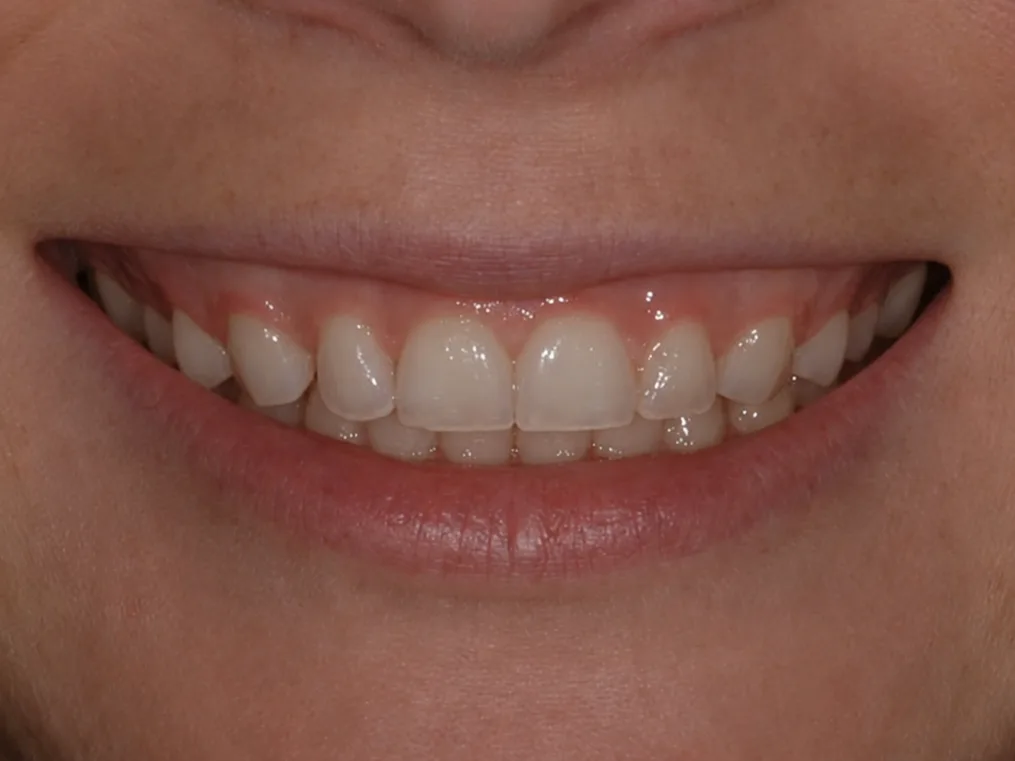
When May a Gingivectomy Be Recommended?
A gingivectomy may be considered for:
- Enlarged or overgrown gums that make cleaning difficult.
- Excess tissue covering part of the teeth.
- An uneven gum line in suitable cases.
- Selected gum pockets that can be treated by removing soft tissue.
- Improving access to a tooth for restorative treatment, where the anatomy allows.
Gum overgrowth may be associated with inflammation or certain medications. Your dentist will assess the cause and may recommend professional cleaning and improved plaque control before considering surgery. Do not stop prescribed medication without advice from the prescribing clinician.
Can It Improve a Gummy Smile?
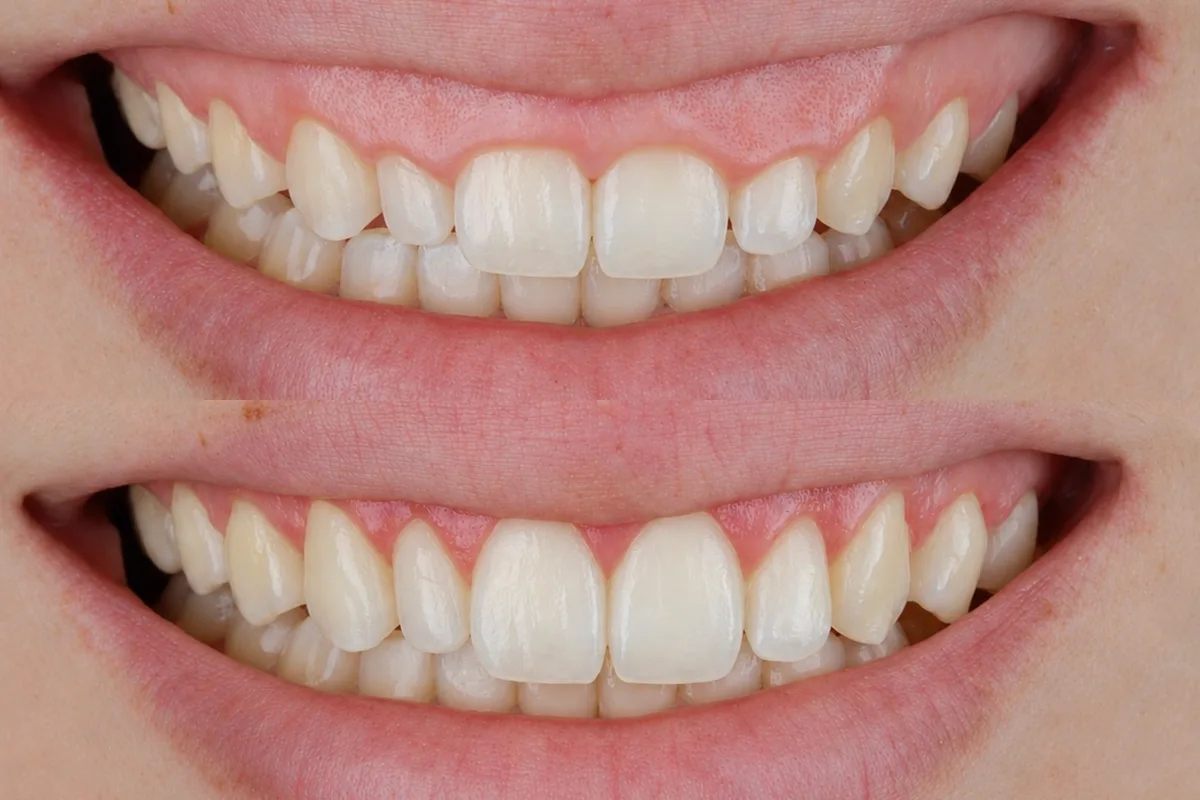
Sometimes. If excess gum tissue covers otherwise normally proportioned teeth, removing selected tissue may reveal more of the natural tooth and improve the balance of the smile.
However, a gummy smile can also relate to lip movement, tooth position or jaw structure. Gingivectomy alone may not address these causes. Your dentist must also assess the amount of attached gum and the relationship between the gum margin and supporting bone.
Potential Benefits
For a suitable patient, treatment may:
- Improve the proportions of visible teeth and gums.
- Create a more even gum contour.
- Make selected areas easier to clean.
- Support restorative treatment by improving access.
The expected benefit depends on the reason for treatment. Gingivectomy does not replace ongoing gum care or treat every form of periodontal disease.
Gingivectomy Techniques: Laser & Surgical Blade
Gingivectomy can be performed using a dental laser or a surgical blade. Both techniques remove selected excess gum tissue and reshape the gum line. Your dentist recommends the approach according to your gum health, tissue thickness, underlying bone levels and treatment goals.
Laser Gingivectomy
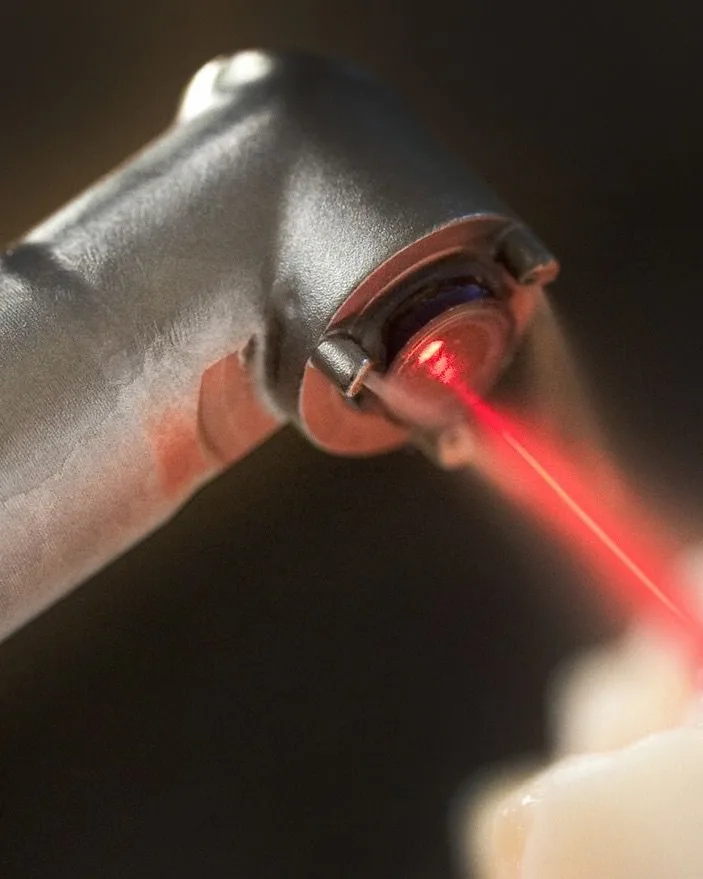
A suitable dental laser removes and contours the planned gum tissue. Depending on the laser used, it can also seal small blood vessels during treatment, helping control bleeding.
Some studies report less postoperative bleeding and discomfort with laser gingivectomy than with a blade. However, comfort and healing vary, and laser treatment is not automatically painless or faster-healing. Appropriate settings, tissue protection and clinical experience are essential.
Surgical Blade Gingivectomy
A surgical blade, or scalpel, is used to carefully remove excess gum tissue and refine its contour. This established technique allows precise incisions without laser-generated heat.
Bleeding is managed during the procedure, and a protective periodontal dressing may be placed afterwards. Some tenderness and minor bleeding can occur during early healing. A blade can be an appropriate choice even when laser treatment is available.
| Feature | Laser Gingivectomy | Blade Gingivectomy |
|---|---|---|
| Method | Laser energy removes selected tissue | A surgical blade removes selected tissue |
| Bleeding control | Certain lasers seal small vessels during treatment | Bleeding is controlled using conventional measures |
| Anaesthesia | Local anaesthesia is usually used | Local anaesthesia is usually used |
| After-treatment discomfort | May be lower in selected cases | Soreness is expected and managed with aftercare |
| Healing | Depends on the laser, settings and extent of treatment | Depends on the extent of treatment and individual healing |
| Key consideration | Requires careful control to avoid thermal injury | Requires careful surgical technique and bleeding control |
Method
- Laser Gingivectomy
- Laser energy removes selected tissue
- Blade Gingivectomy
- A surgical blade removes selected tissue
Bleeding control
- Laser Gingivectomy
- Certain lasers seal small vessels during treatment
- Blade Gingivectomy
- Bleeding is controlled using conventional measures
Anaesthesia
- Laser Gingivectomy
- Local anaesthesia is usually used
- Blade Gingivectomy
- Local anaesthesia is usually used
After-treatment discomfort
- Laser Gingivectomy
- May be lower in selected cases
- Blade Gingivectomy
- Soreness is expected and managed with aftercare
Healing
- Laser Gingivectomy
- Depends on the laser, settings and extent of treatment
- Blade Gingivectomy
- Depends on the extent of treatment and individual healing
Key consideration
- Laser Gingivectomy
- Requires careful control to avoid thermal injury
- Blade Gingivectomy
- Requires careful surgical technique and bleeding control
Neither technique is best for everyone. Correct diagnosis and safe tissue removal are more important than the instrument alone.
Your Gingivectomy Treatment Plan
- 1
Consultation & Gum Assessment
Your dentist examines your teeth and gums, measures relevant pockets and reviews your medical history. X-rays or measurements under local anaesthesia may be needed to assess the relationship between the proposed gum line and supporting bone.
- 2
Initial Gum Care
If inflammation, plaque or tartar is present, professional cleaning and improved home care may be recommended first. The gums are reassessed before the final surgical plan is confirmed.
- 3
Planning the Gum Contour
The proposed amount of tissue removal and expected appearance are discussed. Enough healthy gum must remain, and the natural attachment around each tooth must be respected.
If the underlying bone needs reshaping, crown-lengthening surgery may be required instead of a simple soft-tissue gingivectomy, regardless of whether a laser or blade is used.
- 4
Local Anaesthesia & Treatment
The area is numbed. Your dentist removes the planned excess tissue using the selected technique and refines the gum contour. A protective dressing is placed if needed.
- 5
Recovery & Aftercare
You receive individual instructions for cleaning, eating and pain relief. Choose soft foods initially, avoid disturbing the treated area and use prescribed products only as directed.
Contact the clinic if bleeding persists, pain or swelling increases, or you have concerns about healing.
- 6
Review & Final Smile Assessment
A review is arranged to assess healing and gum health. The contour may continue to change as the tissue matures. If veneers or crowns are planned, your dentist will allow appropriate healing and gum stability before completing the final restorations.
Possible risks include bleeding, infection, sensitivity, recession, uneven contours and tissue regrowth. Treatment suitability and recovery depend on individual clinical findings.
Recovery & Aftercare
Some tenderness, minor bleeding and swelling can occur after treatment. Early healing usually takes place over the following weeks, while the final gum contour may take longer to settle.
Follow your dentist’s instructions, including:
- Choose soft foods initially and avoid irritating the treated area.
- Clean untreated areas normally and follow specific advice for the surgical site.
- Use prescribed mouthwash or medication only as directed.
- Avoid smoking and vaping during healing.
- Attend your review appointments.
Contact the clinic if bleeding does not settle with the measures advised, swelling or pain increases, or you develop signs of infection.
Important Considerations
Possible risks include bleeding, infection, tooth sensitivity, gum recession, uneven healing and changes in tooth appearance. Gum tissue may regrow, particularly if the underlying cause remains.
Removing too much tissue can compromise gum health. Careful diagnosis and conservative planning are essential. If veneers or crowns are planned, your dentist will allow appropriate healing before confirming the final restoration.
Frequently asked questions
Is gingivectomy painful?
Local anaesthetic is used during the procedure. Some soreness afterwards is expected, and your dentist will advise on suitable pain relief.
Is laser gingivectomy always better?
No. The choice of instrument depends on the tissue, treatment requirements and clinician’s assessment. A laser does not remove the need for careful planning or aftercare.
Will my teeth become longer?
More of the existing tooth may become visible. The procedure does not increase the tooth’s actual length.
Are the results permanent?
Results may be long-lasting, but tissue can regrow or the gum contour can change. Managing inflammation and other contributing factors remains important.
Explore Your Gum Treatment Options
Contact Elora Aesthetic Polyclinic, Dubai, to arrange an assessment for excess gum tissue or an uneven gum line.
Treatment suitability, healing and outcomes depend on individual clinical findings.
More in Laser Treatment