What Is a Fiber Post & Core?
The treatment has two components:
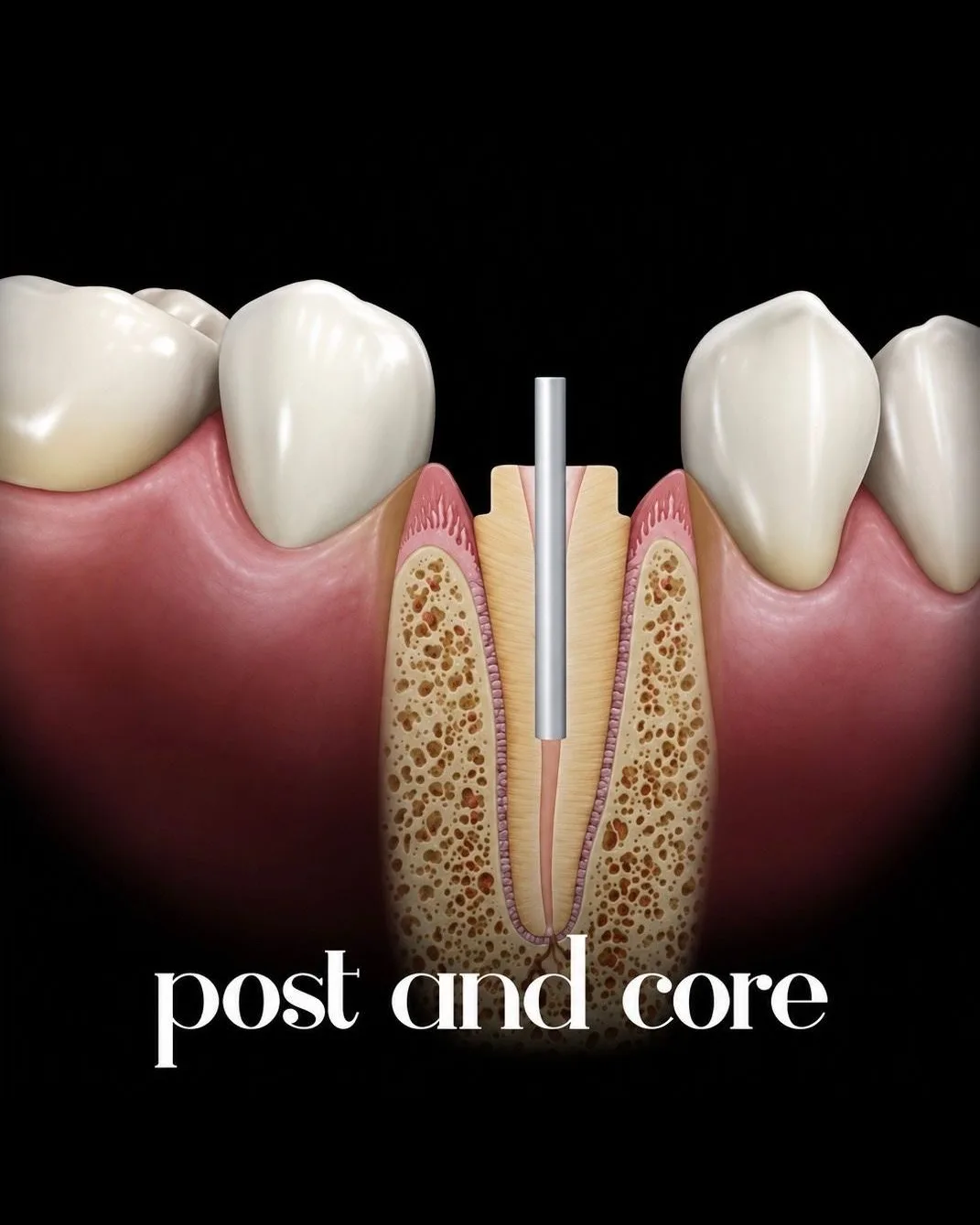
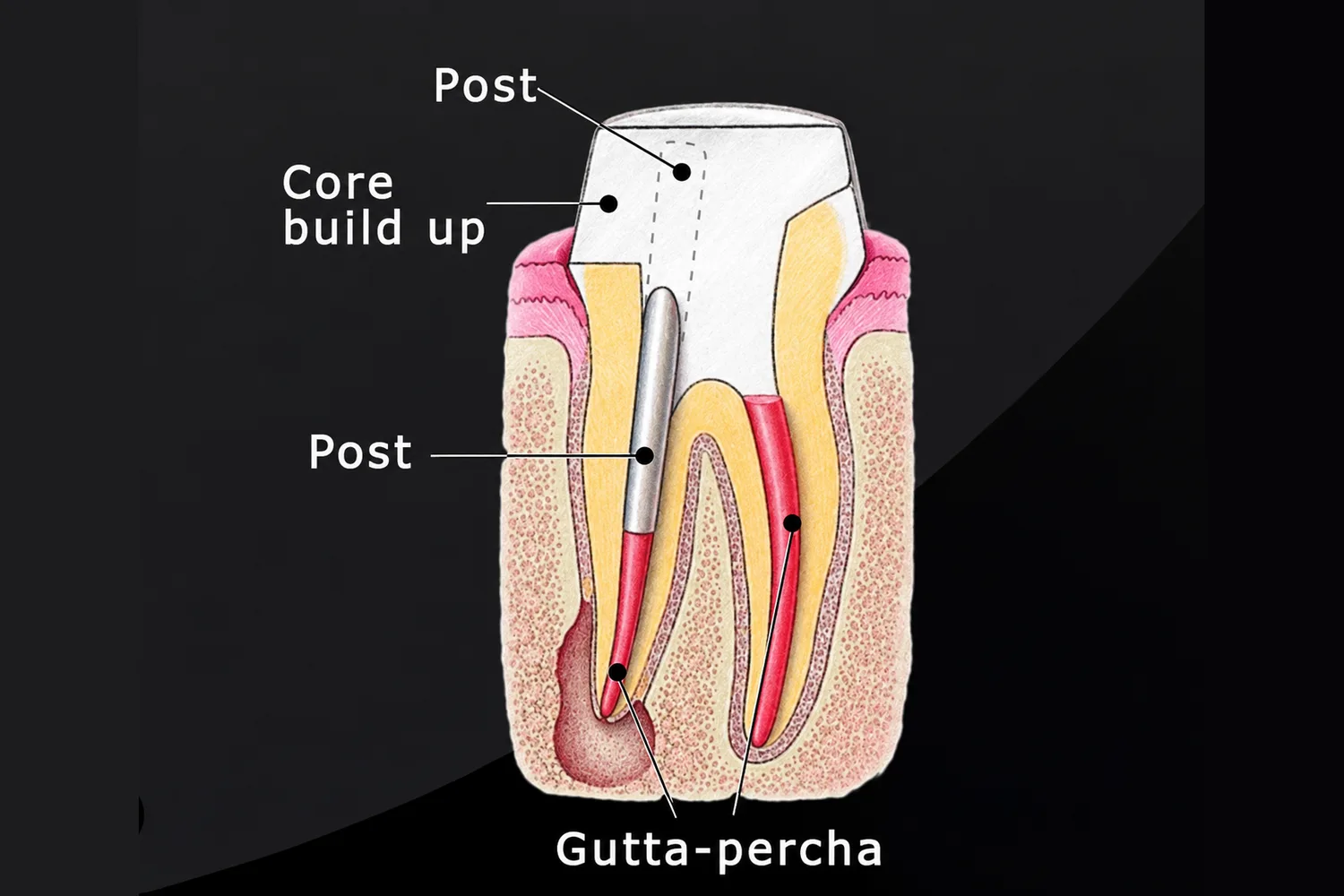
Fiber post
A slender, fiber-reinforced post, commonly made with glass fibers in a resin matrix, bonded into a prepared space within a previously treated root canal.
Core
A build-up, usually made from dental composite, that replaces missing tooth structure above the gum and provides the shape needed to support the final restoration.
The post helps hold the core in place. It does not replace the root, act as an implant or automatically strengthen the tooth.
When May It Be Needed?
A fiber post and core may be considered when:
- Root canal treatment has been completed or assessed as satisfactory.
- Decay, fracture or a large previous filling has left insufficient tooth structure to retain a core.
- The root and surrounding tissues are suitable for restoration.
- A crown or another planned restoration can achieve an acceptable long-term result.
A post cannot compensate for a severely damaged root or an unrestorable tooth. The amount and condition of the remaining natural tooth structure are central to treatment planning.
Potential Benefits
For a suitable tooth, treatment can:
- Help retain a core where natural tooth support is limited.
- Rebuild the foundation needed for the planned crown.
- Allow restoration of a natural tooth that remains clinically salvageable.
- Provide a tooth-coloured alternative to a metal post, which may be helpful beneath certain ceramic restorations.
Fiber posts are not universally better than metal posts. Material selection depends on the tooth, canal anatomy, bite and restorative requirements.
Your Treatment Journey
- 1
Assessment & Planning
Your dentist examines the tooth and takes appropriate X-rays to assess the root filling, remaining structure and surrounding tissues. Any need for further root canal treatment is considered before the final restoration.
- 2
Conservative Post-Space Preparation
A portion of the existing root filling is carefully removed to create space for the post. An adequate seal is maintained at the root tip, and unnecessary removal of root dentin is avoided.
- 3
Post Fitting & Bonding
A suitable fiber post is selected, checked for fit and bonded into the prepared space using an appropriate dental cement.
- 4
Core Build-Up
The missing upper portion of the tooth is rebuilt around the post with a core material and shaped for the planned restoration.
- 5
Final Restoration
Where a crown is required, impressions or digital scans are taken for its fabrication. A temporary restoration may be placed while the final crown is prepared. The crown is then checked and fitted at a subsequent appointment.
Why Is Remaining Tooth Structure Important?
A crown benefits from engaging an adequate band of healthy natural tooth above its margin. This is known as the ferrule effect.
A post does not replace this protective tooth structure. If insufficient healthy tooth remains, additional treatment or an alternative approach may be needed.
How Many Appointments Are Needed?
Post placement and core build-up can often be completed during one appointment. Crown preparation, laboratory fabrication and final fitting may require additional visits.
The schedule depends on whether root canal treatment or retreatment is needed and on the complexity of the restoration.
Aftercare
- Avoid chewing while the area is numb.
- Avoid hard or sticky foods on a temporary restoration.
- Complete the final restoration promptly as advised.
- Brush twice daily and clean between your teeth.
- Attend regular dental reviews.
- Discuss protection against grinding or clenching if relevant.
Contact the clinic if the restoration feels loose, your bite feels uneven, or you develop pain or swelling.
Important Considerations
Possible complications include loss of bonding, post or core fracture, root fracture, recurrent decay and persistent or new infection. Preparing space for a post also carries a risk of damaging or perforating the root.
If root canal retreatment becomes necessary later, the post may need removal, which can make treatment more complex. Further treatment or extraction may occasionally be required.
Frequently asked questions
Does a fiber post strengthen the root?
No. Its primary purpose is to retain the core. Preserving natural tooth structure and providing an appropriate final restoration are more important to long-term survival.
Is a fiber post the same as a dental implant?
No. A post sits inside an existing natural tooth root. An implant replaces the root of a missing tooth.
Does every root canal treatment require a post?
No. If sufficient tooth structure remains to retain the core, a post may be unnecessary.
Will I still need a crown?
A post and core is a foundation, rather than the finished restoration. Your dentist will recommend the appropriate final coverage based on the tooth’s condition and function.
Restore Your Natural Tooth
Contact Elora Aesthetic Polyclinic, Dubai, to arrange an assessment and discuss restoration options for a damaged or root-treated tooth.
Treatment suitability, appointment requirements and outcomes depend on individual clinical findings.
More in Endodontic Treatment