What Is Direct Pulp Capping?
The dental pulp is the soft tissue inside your tooth containing nerves, blood vessels and connective tissue. It may become exposed through deep decay, an injury or during dental treatment.
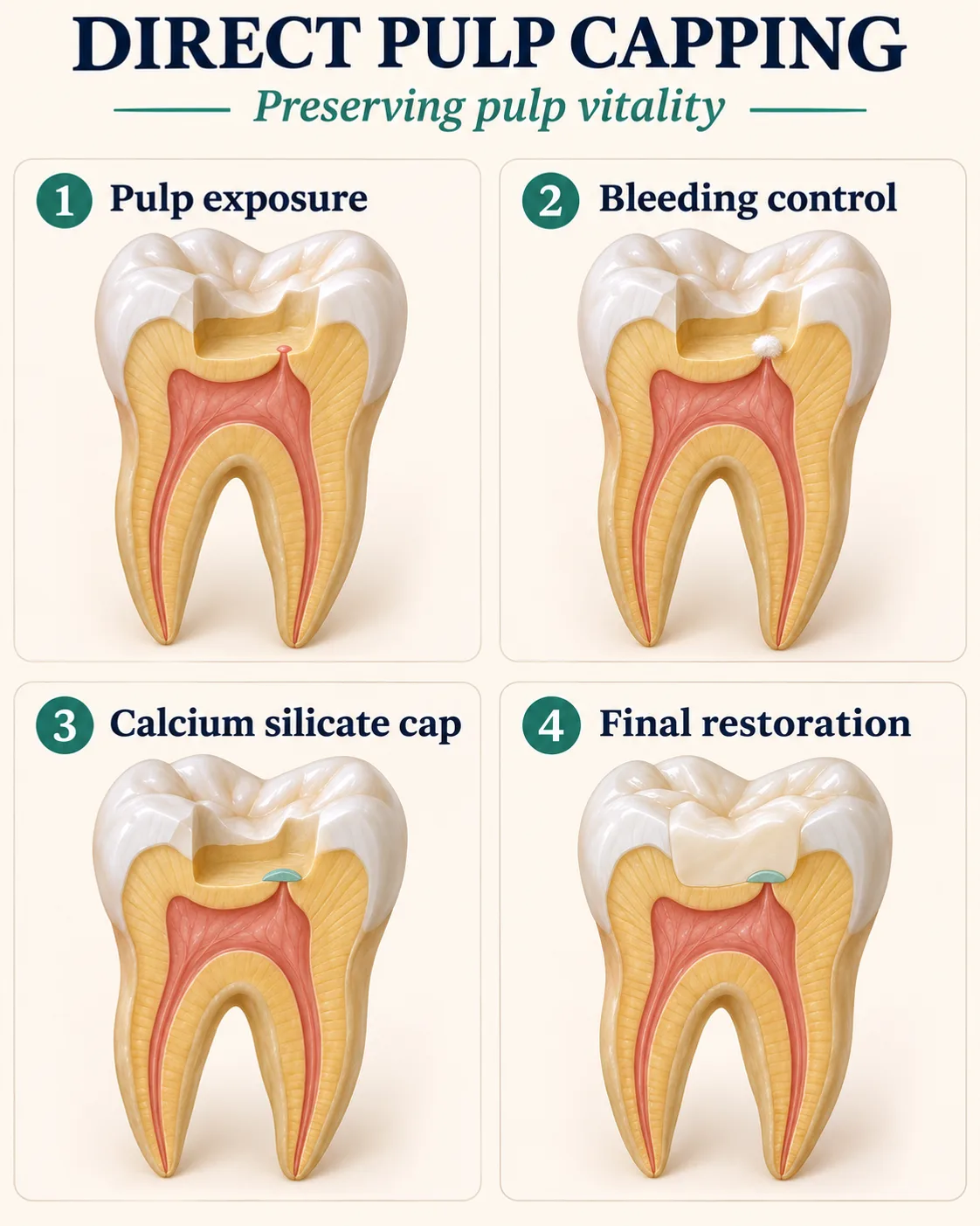
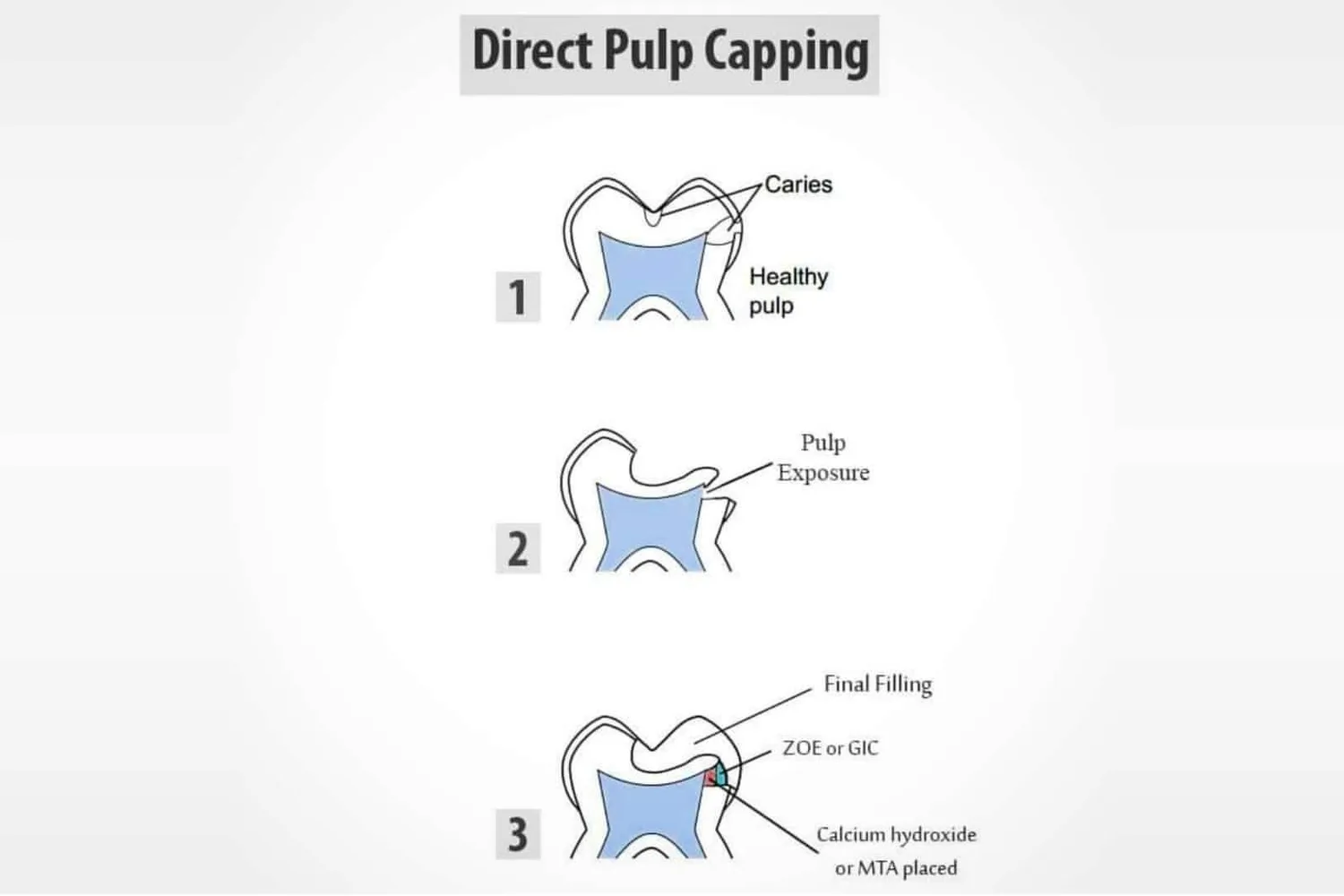
Direct pulp capping involves placing a biocompatible material directly over an exposed area of living pulp, followed by a well-sealed restoration. Modern calcium silicate materials, such as mineral trioxide aggregate (MTA), can support the formation of a protective mineralised barrier.
When May It Be Suitable?
Direct pulp capping may be considered when:
- The pulp is still alive and has the potential to heal.
- Examination and testing indicate a suitable level of pulp health.
- Bleeding at the exposure can be controlled.
- The tooth can be isolated, treated and reliably sealed.
- Enough healthy tooth structure remains for a suitable restoration.
Suitability depends on the diagnosis and findings during treatment, not simply the size of the exposure. It is generally considered for teeth with a normal pulp or reversible inflammation, rather than a dead pulp or established root canal infection.
Potential Benefits
For an appropriately selected tooth, direct pulp capping can:
- Preserve living pulp tissue.
- Support the tooth’s natural protective response.
- Conserve tooth structure.
- Potentially avoid or delay root canal treatment.
- Support continued root development in an immature permanent tooth.
Success depends on careful case selection, infection control, the capping material and the quality of the final seal.
Your Treatment Journey
- 1
Assessment & Diagnosis
Your dentist examines the tooth, reviews your symptoms and performs appropriate pulp tests and X-rays. The condition of the tooth and available treatment options are discussed.
- 2
Anaesthesia & Isolation
Local anaesthetic is used where required. A dental rubber dam isolates the tooth to help prevent contamination from saliva.
- 3
Assessment of the Exposed Pulp
The area is carefully cleaned and bleeding is controlled. Your dentist assesses the exposed tissue to determine whether direct pulp capping remains appropriate.
- 4
Placement of the Protective Material
A suitable pulp-capping material is placed over the exposure to protect the tissue and support healing.
- 5
Sealing & Restoration
The tooth is sealed with an appropriate restoration to reduce bacterial leakage. Depending on the tooth and material used, the final restoration may be completed at the same appointment or a subsequent visit.
- 6
Follow-Up
Review appointments allow your dentist to monitor symptoms, pulp responses and radiographic changes. A tooth feeling comfortable immediately after treatment does not, by itself, confirm long-term success.
More in Endodontic Treatment